
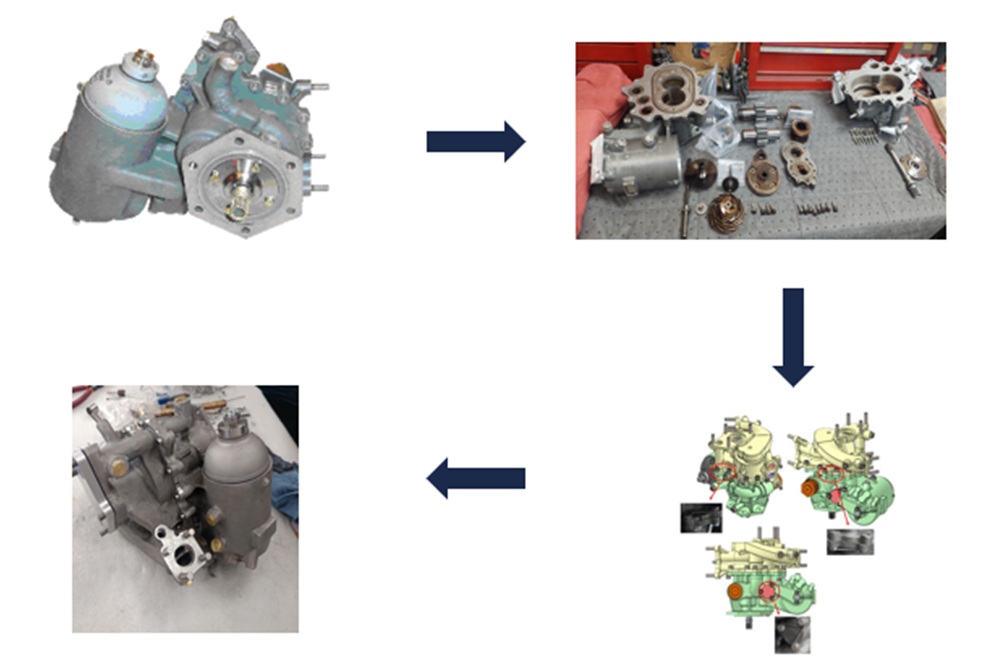
Across the process, water, and industrial sectors, a quiet infrastructure problem is accelerating: the pumps and valves keeping critical systems running are getting older, and the engineering data behind them is disappearing.
The Aging Fleet Problem
A significant share of installed pumps, valves, and pressure vessels across industrial facilities were commissioned decades ago. Many remain in service well beyond their original design life — not by choice, but because replacement, retrofit, or capital reinvestment hasn’t kept pace with the equipment itself.
The challenge isn’t just age. It’s the erosion of information around aging assets:
- Original equipment manufacturers have merged, closed, or discontinued product lines
- CAD models and technical drawings were never digitized, or were lost in facility transitions
- Nameplate data is incomplete, illegible, or doesn’t match any current catalogue
- The engineers who specified the original equipment have long since retired
When a critical pump or valve fails under these conditions, plants face a difficult choice: an extended shutdown while sourcing an unavailable part, an expensive full system redesign, or an unsafe workaround.
Where Reverse Engineering Fits
Reverse engineering offers a fourth option — reconstructing accurate, standards-compliant engineering data directly from the physical component itself.
The process typically involves precision measurement (2D/3D scanning or manual metrology) of the existing part, material identification and verification, and reconstruction of manufacturable CAD models and technical drawings. From there, engineering analysis validates that the part will perform to its original — or improved — specification, followed by documentation package development suitable for procurement, fabrication, or regulatory submission.
Done properly, this doesn’t just replicate a worn-out part. It creates an opportunity to correct known weaknesses, improve materials, or adapt tolerances based on decades of real operating experience — something the original design likely never accounted for.
Why This Matters Now
Three trends are converging to make this urgent for asset-heavy industries:
Supply chain fragility. Lead times for OEM replacement parts have stretched significantly in recent years, and many legacy components are simply no longer manufactured at all.
Workforce turnover. Institutional knowledge about legacy equipment is retiring alongside the workforce that installed it, leaving fewer people who can identify or troubleshoot undocumented assets.
Regulatory and safety pressure. Operating equipment without current, PE-stamped documentation creates compliance risk, particularly for pressure-retaining components where structural integrity has direct safety implications.
A Practical Path Forward
Reverse engineering isn’t about replacing everything at once. It’s a targeted response to a specific, well-defined risk: keeping mission-critical, undocumented equipment running safely, with a documented and repeatable path to replacement when it eventually fails.
For facilities managing aging pump and valve fleets, the question isn’t whether reverse engineering will be needed — it’s whether the documentation exists before the failure happens, or after.